Sanctions

The Real Situation with Seaborne Crude Oil Exports from Russian Ports in 2025
29 May 2026
The efforts of the civilized world to counter Russia’s so-called “shadow fleet,” which transports Russian crude oil and petroleum products, are not delivering effective results. Reports in global media about an alleged decline in exports of “blood oil” are, in fact, a dangerous illusion based on distorted data. This is evidenced by an analysis of Russia’s maritime oil exports conducted by the Black Sea Institute for Strategic Studies. This analysis provides a solid foundation for developing genuinely effective policy responses to curb Russia’s energy exports.

Database of Ukrainian Attacks on Russian Ships in the Black and Azov Seas In March 2022-April 2026
08 April 2026
From February 2022 through April 2026, the Defense Forces of Ukraine carried out at least 62 successful attacks on Russian warships in the Black and Azov Seas, in ports and at sea, using missiles, small unmanned surface vessels, and UAVs.

Russia's Circumvention of Sanctions to Sustain Civil Aviation in 2025: Trends and Prospects
25 February 2026
Despite Western sanctions, Russia managed to maintain operational civil aviation throughout 2025 by relying on parallel import networks in countries that did not impose sanctions restrictions. While the UAE, Turkey, and China served as primary transit hubs during 2022–2024, new enforcement measures in late 2024 prompted corresponding modifications to Russia's evasion schemes. Specifically, by 2025, India had emerged as the principal channel with documented shipments exceeding $50 million, routes through Central Asia and the Caucasus proliferated via multi-jurisdictional corporate chains, and intermediaries increasingly shifted business models and jurisdictions to evade detection. This report documents the specific trends and developments of 2025 against the baseline sanctions-evasion architecture established during 2022–2024.

Sanctions: On the verge of a change in leadership? The comparative analysis of the content and scope of sanctions imposed on legal entities
28 January 2026
Now that the US administration has effectively set out to dismantle the existing sanctions regime against Russia and is using the numerous sanctions imposed by the previous administration merely as a bargaining chip in business negotiations with the Russian Federation, the importance of European policy is growing. Europe needs – not merely to support Ukraine, but for its own security – to take the lead in exerting pressure on Russia.

Russia’s Civil Aviation in 2025: Flying Close to the Edge
02 September 2025
By mid-2025, Russian civil aviation has found itself facing unprecedented challenges. The cumulative impact of Western sanctions, the deterioration of technical infrastructure, and an inevitable rise in the number of critical system failures across every segment of the industry have brought it to a breaking point. The sector is experiencing its most acute crisis in decades. BSN monitoring for the first seven months of 2025 has already clearly confirmed a further increase in the number of aviation incidents compared to 2023 and 2024, with wing mechanism malfunctions, air conditioning system failures, brake and landing gear issues, as well as fuel leaks becoming daily occurrences.

Andriy Klymenko: «La “flotte fantôme russe“ est un mythe inventé par commodité»
24 February 2025
Andriy Klymenko est le chef du groupe de surveillance de l’Institut d’études stratégiques de la mer Noire et le rédacteur en chef du portail BlackSeaNews. Tyzhden s’est entretenu avec lui au sujet de la flotte fantôme russe, de l’efficacité des sanctions et des perspectives de limiter le trafic pétrolier russe en mer Baltique.

Andrii Klymenko: "The Shadow Fleet and Price Ceiling are Myths Contrived by the US for its Own Convenience"
20 February 2025
Andrii Klymenko, Head of the Monitoring Group of the Black Sea Institute of Strategic Studies, talks about how to weaken Russia's financial capacity to wage an aggressive war; the fact that Russian oil is not really sanctioned; the shadow fleet and the possibility of shutting down the Baltic Sea to tankers with Russian “blood oil”; and the urgency of imposing a complete embargo on all trade with Russia.

The Problem of Assessing Russia's Economic Capacity to Wage War Under Sanctions. Part 6
21 January 2025
Extremely important political conclusions are made on the basis of the Russian official statistics and with the use of classical methods of peacetime economic and social analysis under the conditions of deliberate disinformation campaigns waged by Russia, which are intended to lead to such conclusions. Note that the BSISS conclusions had been drawn, but not yet published, a few days prior to the recent crash of the Russian Sukhoi Superjet at Antalya Airport, Turkey.

Sanctions Must Continue: A Comparative Analysis of Sanctions Against Legal Entities
15 December 2024
If the goal is to, at the very least, prevent military production by the Russian Federation, the process of identifying relevant legal entities and applying sanctions must continue at full speed. Exposing and restricting every enterprise directly or indirectly related to the Russian military-industrial complex or war financing is crucial in preventing the aggressor from producing modern weapons of the qualities and in the quantities required for warfare.

Andrii Klymenko: The Global Sanctions Policy Must be Viewed as a Powerful Instrument of International Security
28 June 2024
Below is the text of the presentation by the Head of the BSN-BSISS Monitoring group Andrii Klymenko at the Crimean Expert Platform Conference, June 24, 2024, Kyiv
Sanctions: Who has imposed more and whose are more effective? The comparative analysis of the content and scope of sanctions against legal entities
07 November 2023
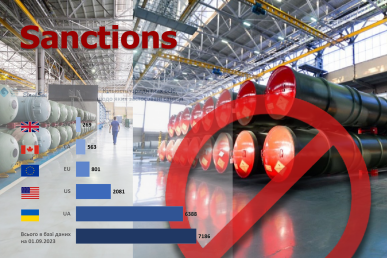
The analysis has been made based on the database of legal entities subject to sanctions in connection with Russian aggression against Ukraine, maintained by the Monitoring Group of the Black Sea Institute of Strategic Studies since the beginning of Russian aggression. Ukrainian, US, EU, UK, and Canadian sanctions have been analysed.
Crimean Titan: Under a Russian Holding or a Ukrainian Tank?
21 July 2023
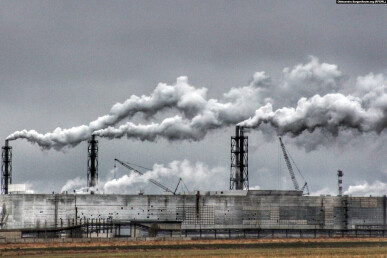
The Crimean Titan may become part of a large titanium holding company being created in Russia by the companies closely affiliated with the Rotenberg brothers or a «fallen hero» holding back the Ukrainian offensive. Either one of the diametrically opposed scenarios is a real possibility in the near future. In any case, in recent months, Crimean patriots have been regularly reporting that Russia has been taking steps to turn the Crimean Titan into a fortification on the path of a Ukrainian counteroffensive. Since May this year, Ukrainian officials have been also voicing such opinion.
A Review of the Impact of International Sanctions on the Socio-economic Situation in the Russian Federation
07 November 2022
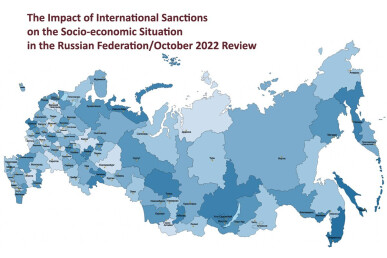
Putin's October 2022 statements have sent a clear signal: Russia wants to supply fuel to Europe. The start of the EU embargo on Russian maritime oil and petroleum products export on December 5, 2022, and February 5, 2023, respectively, could become a major turning point. The war, sanctions and trade blockade put the Russian economy on the «powder keg» of future trillion-dollar defaults. Russian economy is currently experiencing a growing jam of loan defaults. No sector of the Russian economy would remain unaffected by the current crisis caused by the large-scale war and Western sanctions. The sanctions hit Russia much more painfully than those who apply them.
Illegal Visits to Crimean Ports by Foreign Merchant Ships (Except Russian Ones) in 2020
15 March 2021
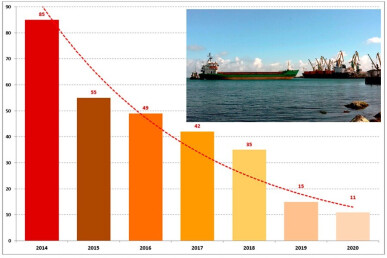
While in 2014, the first year of the occupation of Crimea and the year of the imposition of sanctions, 85 vessels violated them, later the number of violators declined annually, and in 2020, there were only 11 such vessels, i.e. their number had decreased eightfold. The impossibility of legal maritime export and import due to sanctions has rendered the whole port industry of occupied Crimea unnecessary for the economy.
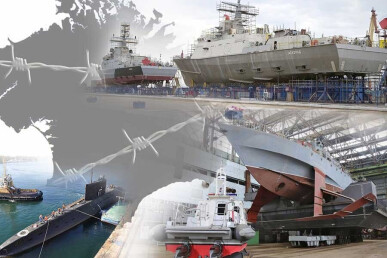
How the Sanctions Work. The Defense Industry of the Occupied Crimea
22 January 2021
The occupied Crimea has become a base for troops and armaments, an important logistical point in the Russian military operations in Syria, and a convenient locale for much of the military-industrial complex formed with the captured Ukrainian enterprises.