Sanctions: On the verge of a change in leadership? The comparative analysis of the content and scope of sanctions imposed on legal entities
The Monitoring Group of the BlackSeaNews
and the Black Sea Institute for Strategic Studies
We continue to analyse the scope of sanctions imposed on legal entities using the Database of Legal Entities Under Sanctions in connection with Russia’s aggression against Ukraine, which has been maintained by the Monitoring Group of the Black Sea Institute for Strategic Studies since the start of Russia’s aggression.
The analysis used data as of 1 November 2025. The previous review was carried out as of 1 November 2024.
The database contains legal entities on which sanctions have been imposed by:
- Ukraine,
- the USA,
- the EU,
- the UK,
- Canada.
The database is constantly updated. This process involves a lot more than just transferring data from the sanctions lists. It requires a thorough identification of each entity. Sometimes, due to a lack of information in sanctions lists or errors that do occur there, the identification process can be quite complex, and in some cases it is only possible once the authority that imposed the sanctions has corrected an error in the list.
Whenever possible and necessary, we also add crucial information about sanctioned entities, such as their official and actual addresses, registration and tax data, partners, and connections.
The database, however, isn't merely an updated list of the sanctioned organisations. It also contains the entire sanctions decision history for each entity, as well as all changes to their names and legal status, reorganisations, liquidations, bankruptcies, successors and/or managing companies, all tracked in a timely manner.
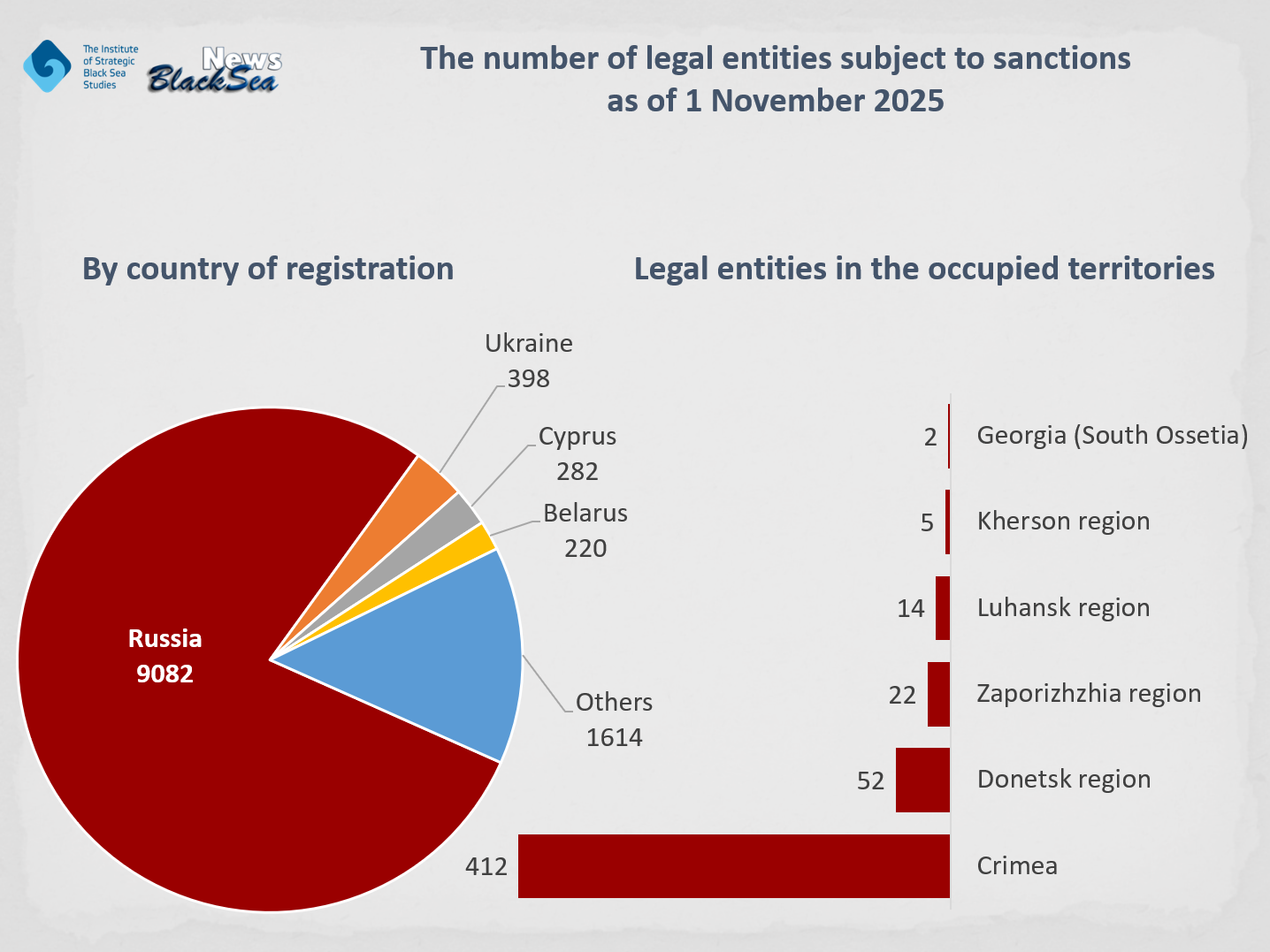
As of 1 November 2025, the database contained a total of 11,596 legal entities, the vast majority of which – 9,082 (78%) – were registered in the Russian Federation (Figure 1) and 507 ones – in the occupied territories of Ukraine (505) and Georgia (2).
In addition, the database includes five legal entities registered by Russia in the city of Kherson during its occupation in 2022 that have been subject to sanctions.
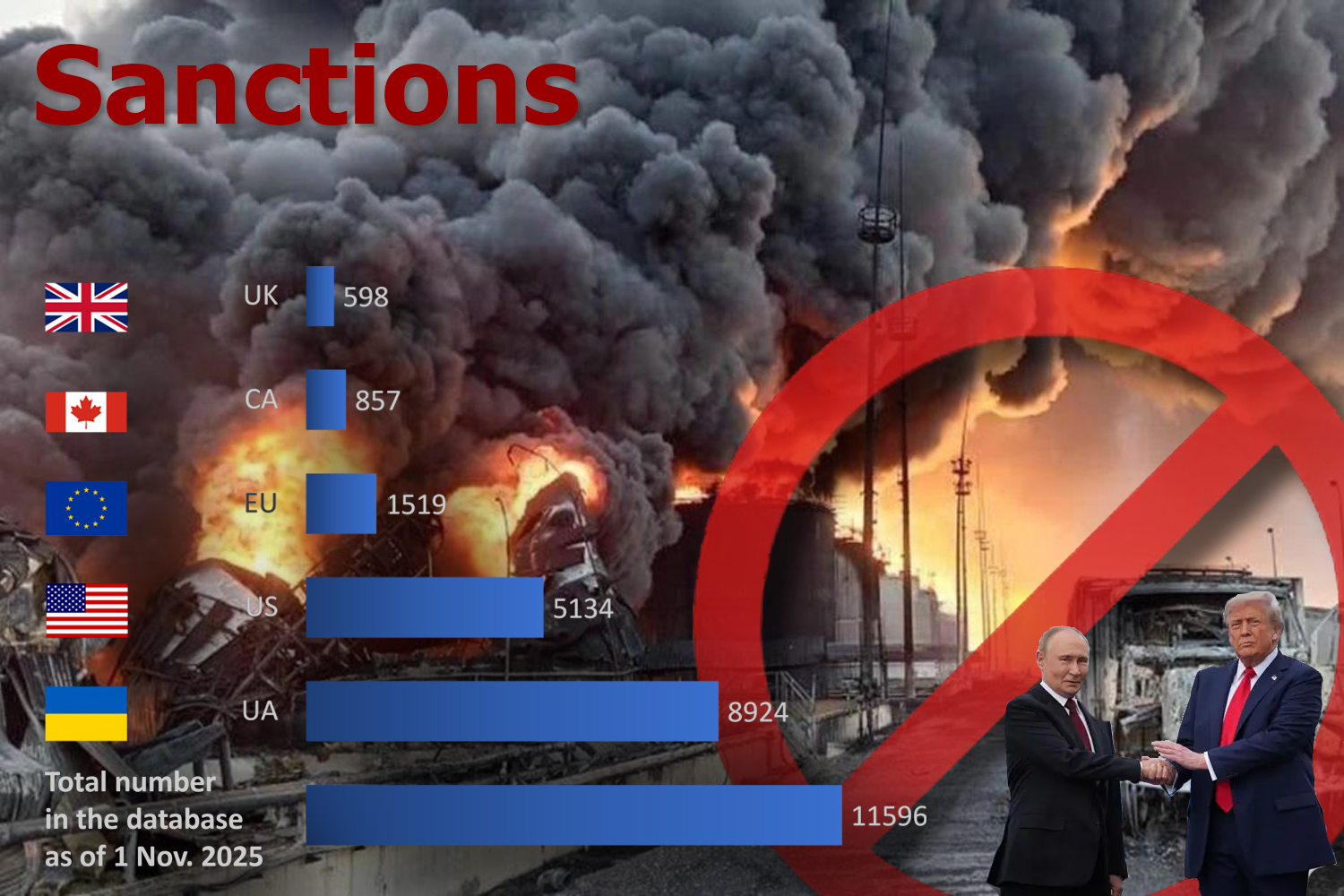
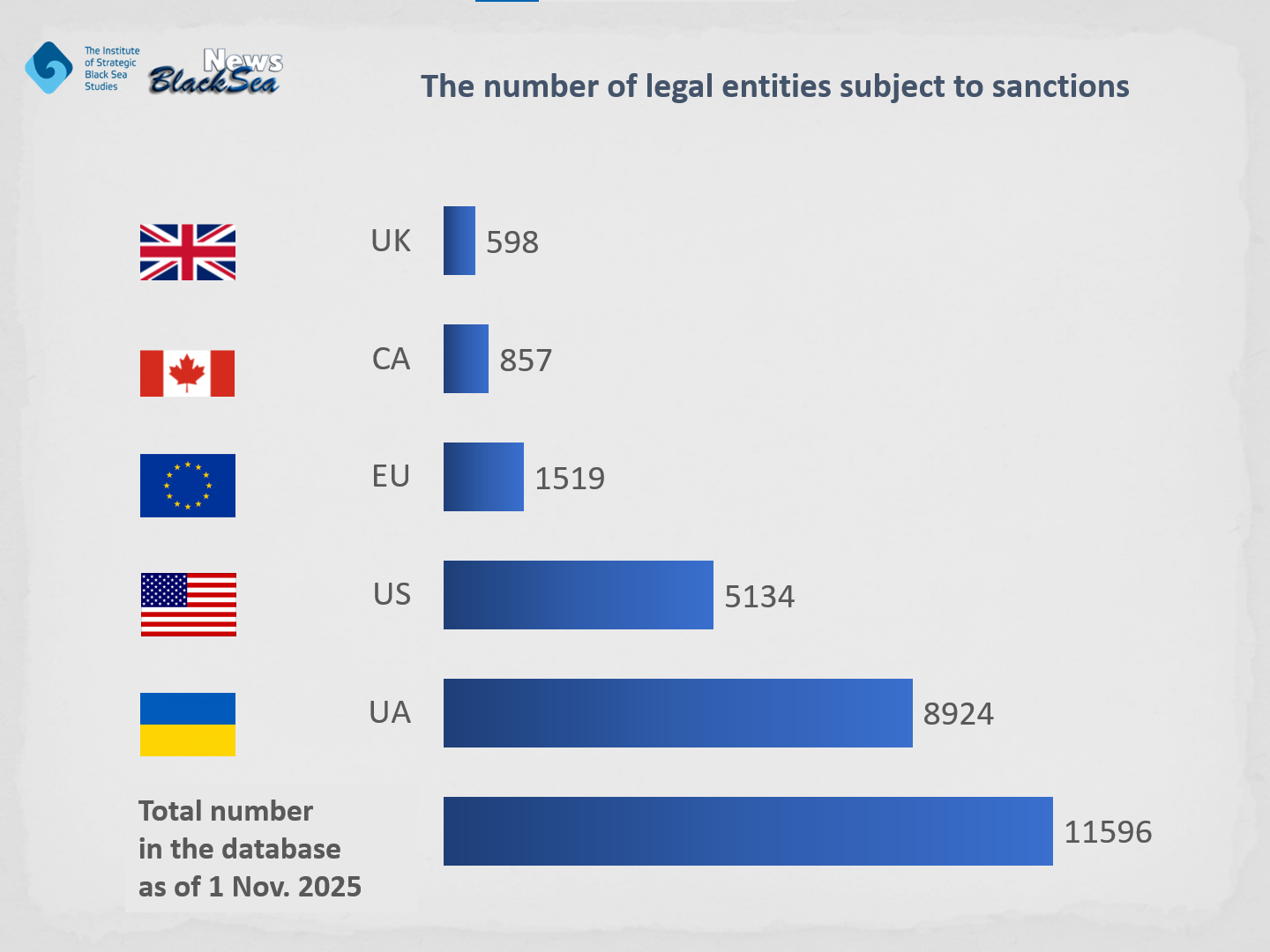
Figure 2 shows the number of sanctions imposed on legal entities, broken down by the countries that introduced them.
Ukraine has imposed sanctions on the largest number of organisations (8,924). US sanctions apply to 5,134 entities, which include both legal entities on the Office of Foreign Assets Control (OFAC) list and those subject to export restrictions. The number of legal entities on the EU lists has reached 1,519, but it is still lower than expected. There are significantly fewer sanctions introduced by other states.
Ukraine's sanctions
The database contains all organisations mentioned in Presidential Decrees of Ukraine on sanctions against legal entities since September 2015.
In recent years, Ukraine has considerably expanded its sanctions lists. As of 1 November 2025, the database contained 8,924 legal entities subject to Ukrainian sanctions.
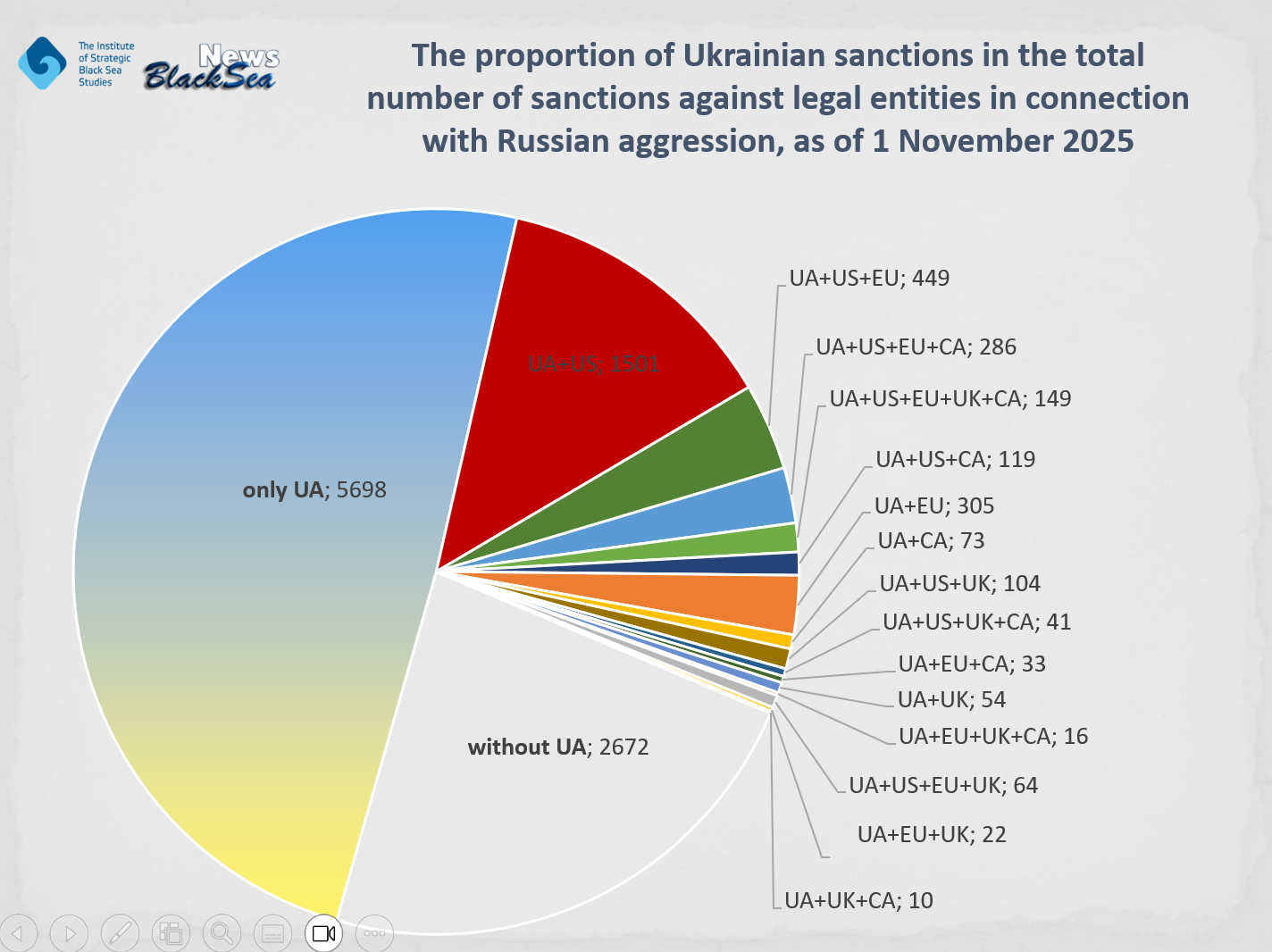
Sanctions imposed by Ukraine alone have been applied to 5,698 legal entities (representing 49% of the total number in the database).
Between our previous review and 1 November 2025, Ukraine adopted 41 decisions on sanctions against 1,724 legal entities. These include both the extension of existing sanctions and the addition of new legal entities, particularly as part of the process of aligning sanctions with European and US lists.
The sanctions imposed by Ukraine during the war do not resemble ‘traditional’ economic sanctions, as there has been no economic cooperation with representatives of the aggressor state for a long time.
The primary goal of Ukraine’s sanctions against Russian companies today is to inform our partners in the ‘sanctions coalition’ of the need for them to impose sanctions on these entities.
In addition, over time, sanctions have come to serve another purpose: they provide a form of ‘legitimisation’ for the Ukrainian Defence Forces’ strikes against these enterprises.
US sanctions
The database contains all legal entities listed on the SDN, SSI, and CAPTA lists maintained by the US Department of the Treasury’s OFAC under sanctions programmes relating to Russian aggression against Ukraine:
- UKRAINE-EO13660 (Executive Order 13660)
- UKRAINE-EO13661 (Executive Order 13661)
- UKRAINE-EO13662 (Executive Order 13662)
- UKRAINE-EO13685 (Executive Order 13685)
- RUSSIA-EO14024 (Executive Order 14024)
- RUSSIA-EO14065 (Executive Order 14065)
- BPI-RUSSIA-EO14024 (Blocked Pending Investigation, Russian Harmful Foreign Activities Sanctions Regulations, 31 CFR Part 587)
- BELARUS (Belarus Sanctions Regulations, 31 C.F.R. part 548; Executive Order 13405)
- BELARUS-EO14038 (Executive Order 14038)
However, the list of sanctioned legal entities in the database is not limited solely to ‘Russian-Ukrainian’ programmes. Over time, more and more companies included in other US sanctions programmes have been coming under scrutiny as entities linked in one way or another to Russian aggression against Ukraine.
Therefore, the database also includes legal entities listed under the following OFAC programmes:
- CAATSA-RUSSIA (Countering America's Adversaries Through Sanctions Act of 2017)
- CAR (Central African Republic Sanctions, 31 C.F.R. part 553)
- CYBER2 (Executive Order 13694; Executive Order 13757)
- CYBER4 (Executive Order 13694; Executive Order 13757; Executive Order 14144; Executive Order 14306)
- DPRK (Executive Order 13551)
- DPRK2 (Executive Order 13687)
- DPRK3 (Executive Order 13722)
- ELECTION-EO13848 (Executive Order 13848)
- GLOMAG (Executive Order 13818 – Global Magnitsky)
- IFSR (Iranian Financial Sanctions Regulations, 31 CFR part 561)
- IRAN-CON-ARMS-EO (Executive Order 13949)
- IRAN-EO13902
- IRAN-EO13846
- IRGC (Iranian Financial Sanctions Regulations, 31 CFR Part 561)
- NICARAGUA (Executive Order 13851)
- NPWMD (Weapons of Mass Destruction Proliferators Sanctions Regulations, 31 C.F.R. part 544)
- PEESA-EO14039 (Executive Order 14039)
- SDGT (Global Terrorism Sanctions Regulations, 31 C.F.R. part 594)
- SYRIA (Executive Order 13338; EO 13399; EO 13460; EO 13572; EO 13573; EO 13582)
- SYRIA-CAESAR (Sections 7404-7438 of the National Defense Authorization Act for Fiscal Year 2020, Title LXXIV—Caesar Syria Civilian Protection Act of 2019)
- TCO (Transnational Criminal Organizations Sanctions Regulations, Executive Order 13581)
- VENEZUELA-EO13850 (Executive Order 13850)
The database separately identifies legal entities subject to US export restrictions.
These are companies included on the Entity List (EL) and the Military End User List (MEU List) maintained by the Bureau of Industry and Security (BIS) of the US Department of Commerce.
Over the three-month period from November 2024 to January 2025, seven decisions were taken to add 469 legal entities to the OFAC SDN List under the RUSSIA-EO14024 sanctions programme.
Over the nine-month period from February to October 2025, one decision was issued under the RUSSIA-EO14024 programme: in October, sanctions were imposed on PJSC Rosneft, PJSC Lukoil, and 34 of their affiliated companies.
A further eight legal entities linked to Russian aggression were subject to US sanctions in 2025 for reasons unrelated to the war against Ukraine – under the SDGT and CYBER4 programmes.
Figure 4 shows all legal entities in the database that are subject to any US sanctions (OFAC and/or BIS).
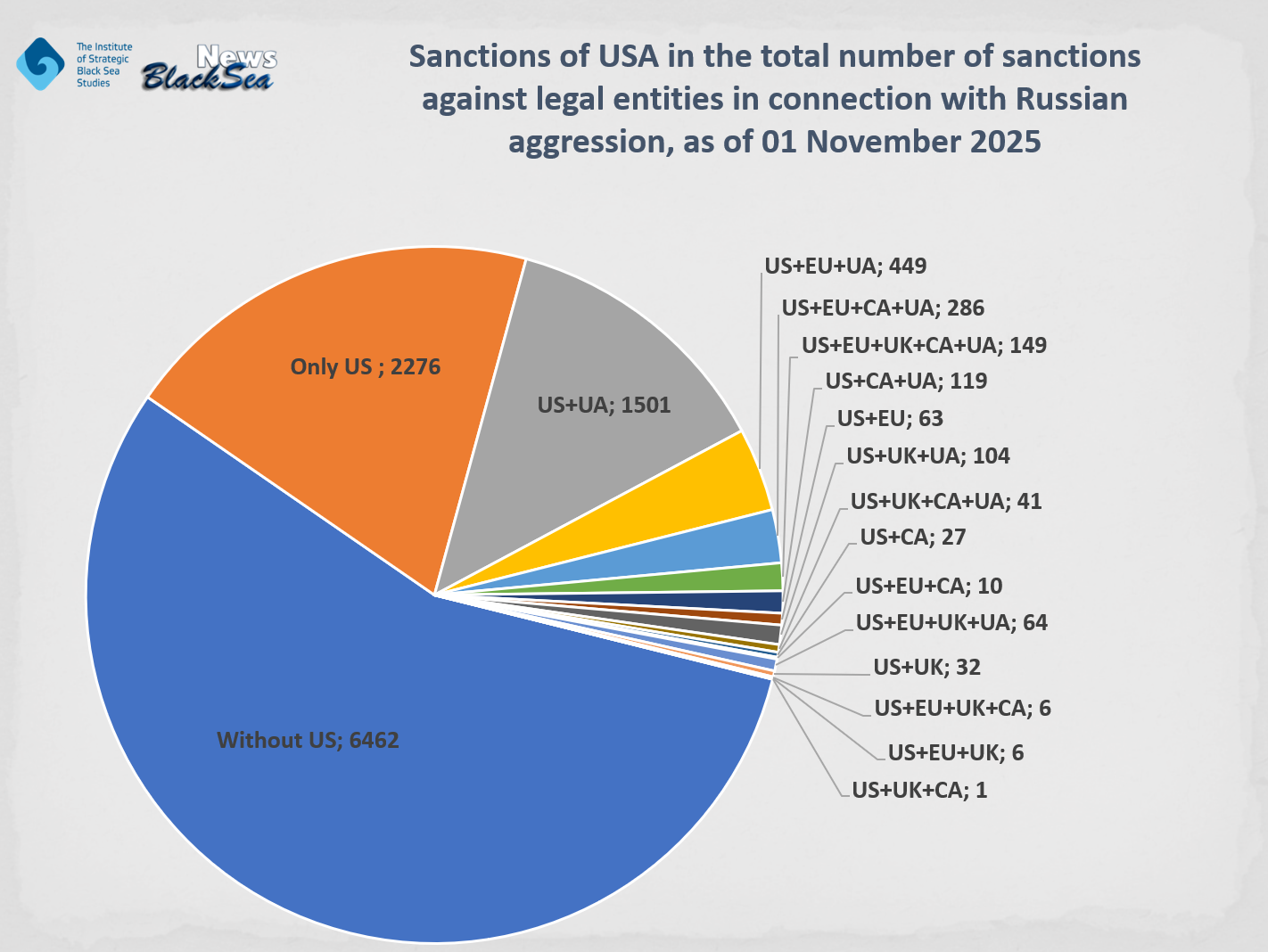
Unfortunately, today it is difficult to analyse everything relating to US sanctions against Russia.
We have become accustomed to emphasising the role of US sanctions in maintaining and intensifying the pressure on Russia (which was indeed the case until 2025); however
at present, it is impossible to predict not only whether new US sanctions will be imposed, but also how long the existing ones will remain in place.
For example, sanctions against the foreign subsidiaries of Rosneft and Lukoil have been effectively nullified by numerous OFAC General Licences, which authorise almost all transactions that were previously prohibited under the sanctions regime. The validity of such exemptions from the sanctions regime is easily extended on a case-by-case basis and appears to be the result of business negotiations between the USA and Russia.
In other words, while companies are on sanctions lists, there are no sanctions restrictions.
What is more, as a result of numerous staffing decisions in 2025, the sanctions compliance monitoring system is no longer functioning properly.
In fact, Russia’s status in the eyes of the USA has also changed: it is unclear whether it is now an ‘ally’ or a ‘partner’, but it is certainly no longer an aggressor… Therefore, there is currently little hope that the USA will continue its more or less effective sanctions policy towards Russia.
In these circumstances, sanctions imposed by the EU and Ukraine’s other partners are becoming increasingly significant.
EU sanctions
EU sanctions are governed by several key Council Decisions and corresponding Council Regulations, to which amendments and additions are made when new sanctions packages are adopted.
The database contains all legal entities subject to EU sanctions in connection with Russian aggression under the following EU Regulations:
- Council Regulation (EU) No 269/2014 of 17 March 2014 concerning restrictive measures in respect of actions undermining or threatening the territorial integrity, sovereignty and independence of Ukraine;
- Council Regulation (EU) No 692/2014 of 23 June 2014 concerning restrictive measures in response to the illegal annexation of Crimea and Sevastopol;
- Council Regulation (EU) No 833/2014 of 31 July 2014 concerning restrictive measures in view of Russia's actions destabilising the situation in Ukraine.
In addition, there are Belarusian companies and Russian legal entities on which the EU has imposed sanctions due to cyberattacks and human rights violations under the following Regulations:
- Council Regulation (EC) No 765/2006 of 18 May 2006[1] concerning restrictive measures in view of the situation in Belarus and the involvement of Belarus in the Russian aggression against Ukraine;
- Council Regulation (EU) 2019/796 of 17 May 2019 concerning restrictive measures against cyber-attacks threatening the Union or its Member States;
- Council Regulation (EU) 2020/1998 of 7 December 2020 concerning restrictive measures against serious human rights violations and abuses.
Overall, the EU’s stance on the advisability of supporting Ukraine and exerting greater influence on Russia has evolved since the start of the full-scale war.
While some EU officials claimed in late 2022 that the potential for sanctions had been exhausted, 2023–2024 brought a stark realisation of the Russian threat to Europe (with elections in the USA playing a significant role in this). Nevertheless, this realisation has not translated into sufficient changes to the scope and procedures for imposing EU sanctions on Russia.
Between our previous review and 1 November 2025, the EU adopted five rounds of sanctions (rounds 15 to 19), and 384 legal entities were added to the sanctions lists.
At present, European sanctions against legal entities account for around 13% of the total number of legal entities under sanctions.
Unfortunately, until the EU resolves the organisational issues regarding the exclusion from decision-making of member states under Russian influence (primarily Hungary), the situation will not change.
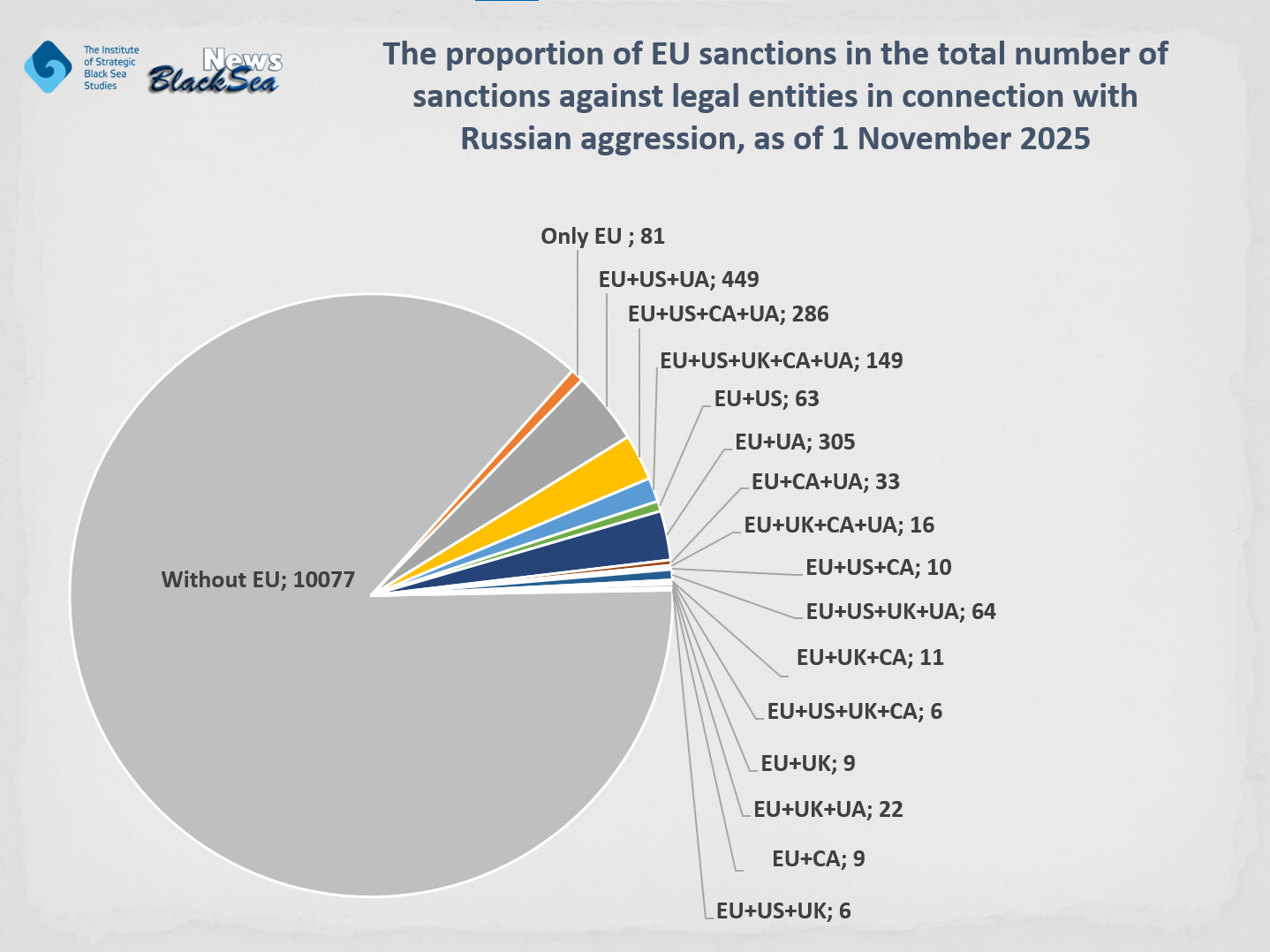
Today, there is less and less need to convince Europeans of the reality of the Russian threat and the necessity to step up sanctions pressure. The priority now is the systemic issue of countering Russia’s corrupt influence on individual EU countries.
Canada’s sanctions
The database contains legal entities subject to sanctions under Special Economic Measures Regulations adopted between 2014 and 2020 pursuant to the Special Economic Measures Act.
- Special Economic Measures (Russia) Regulations (SOR/2014-58) of 17.03.2014;
- Special Economic Measures (Belarus) Regulations (SOR/2020-214) of 28.09.2020;
- Special Economic Measures (Ukraine) Regulations (SOR/2014-60) of 17.03.2014. These are sanctions targeting the occupied territories and individuals involved in the occupation.
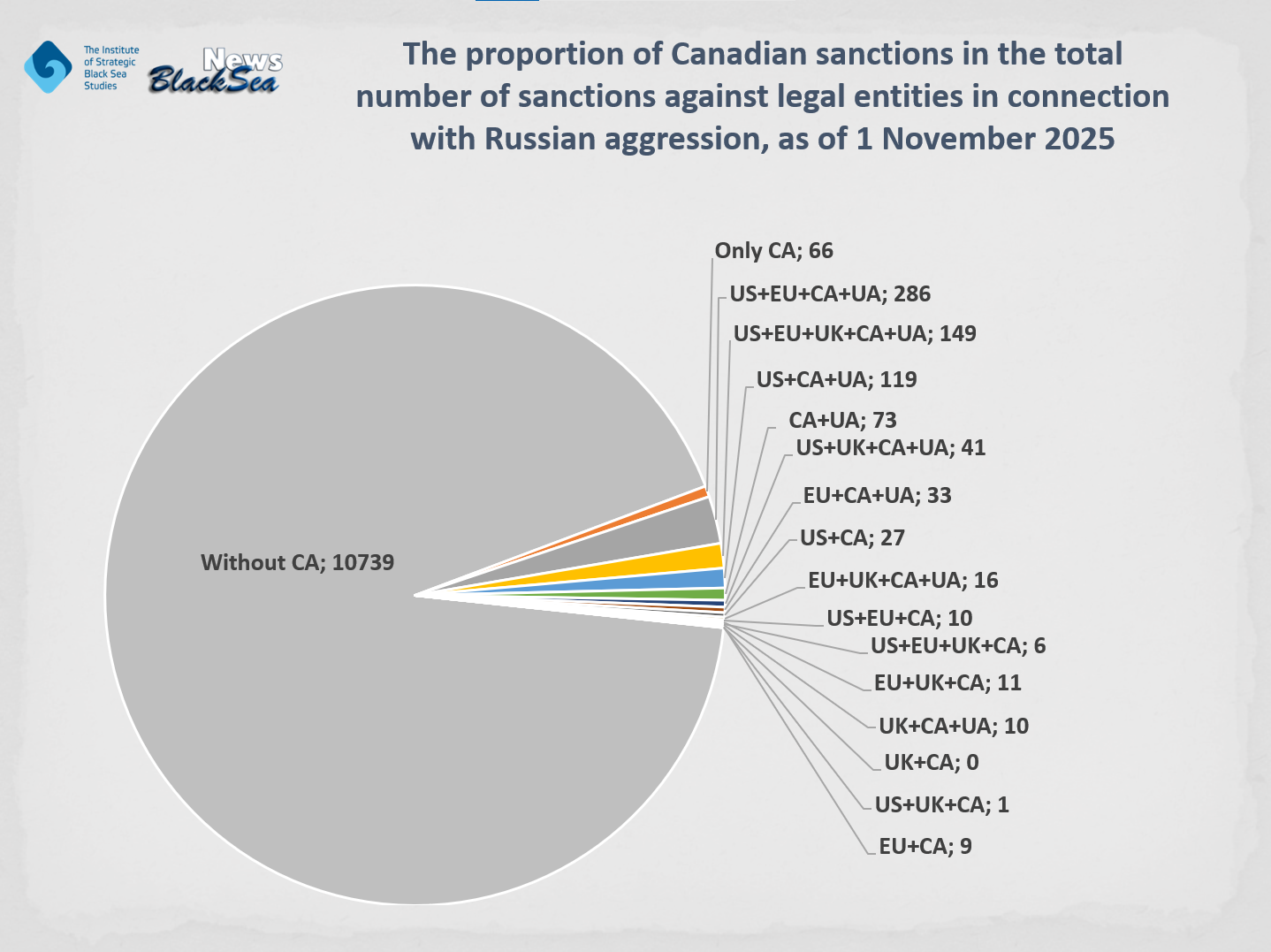
As of 1 November 2025, Canadian sanctions accounted for 7.4% of the total number of legal entities under sanctions, similarly to the previous year.
UK sanctions
The UK sanctions list comprises the EU lists in force up to 31 December 2020, as well as entities against which UK sanctions were imposed following Brexit.
The ‘old’ European sanctions were transformed in accordance with the Sanctions and Anti-Money Laundering Act 2018. Together with the new UK sanctions, they have become part of the UK’s sanctions regimes.
The database contains all legal entities included on the UK sanctions list under the following regime:
As well as several legal entities under the following regimes:
- Republic of Belarus (Sanctions) (EU Exit) Regulations 2019
- Iran (Sanctions) (Nuclear) (EU Exit) Regulations 2019
- Syria (Sanctions) (EU Exit) Regulations 2019
- Cyber (Sanctions) (EU Exit) Regulations 2020
- Chemical Weapons (Sanctions) (EU Exit) Regulations 2019
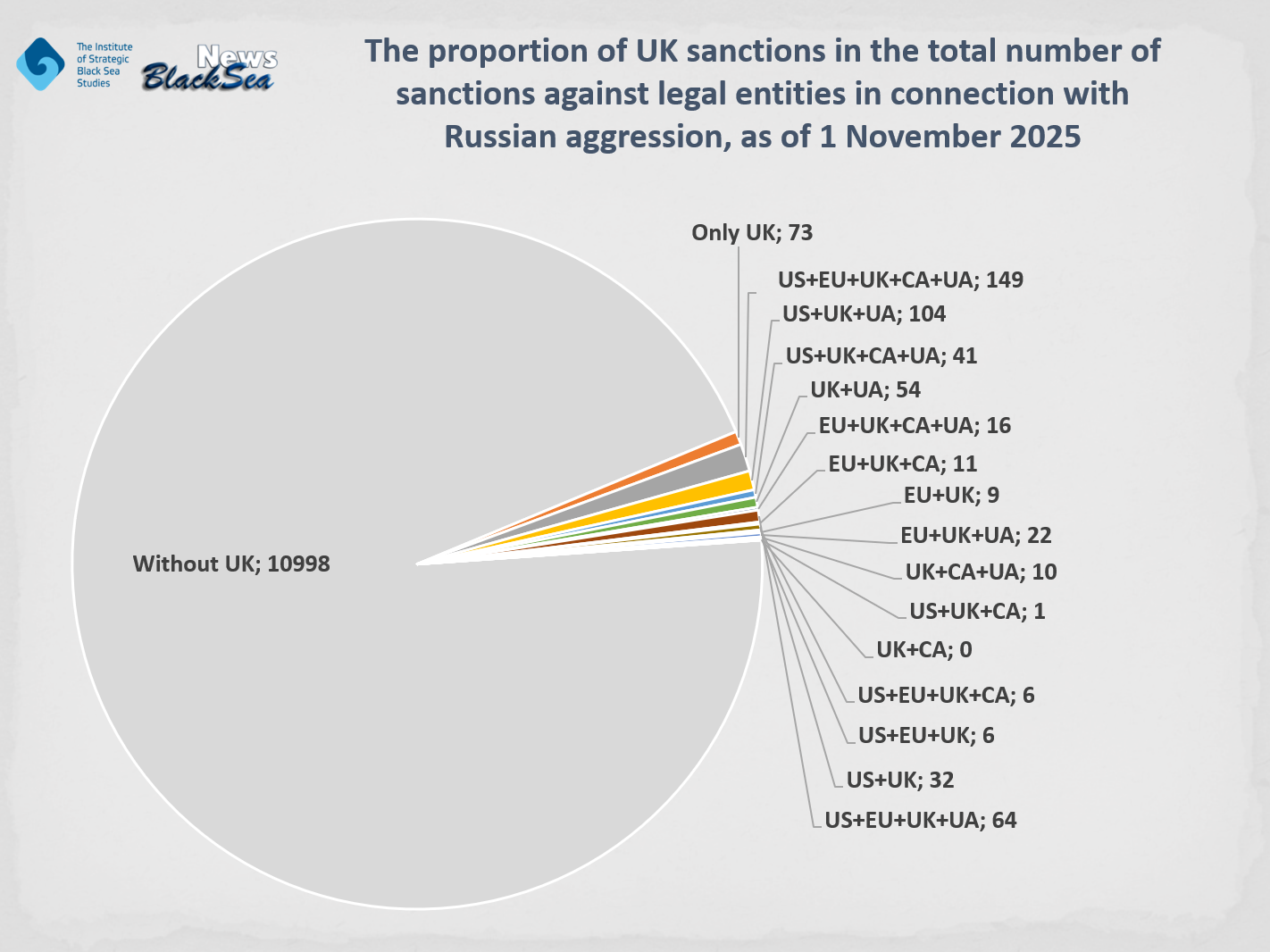
The UK’s sanctions lists currently include 598 legal entities, which account for just 5.2% of the total number of entities subject to sanctions. Between November 2024 and November 2025, 186 legal entities were added to the lists.
Despite the UK’s significant role in supporting Ukraine in its fight against Russian aggression, the scale of British sanctions against legal entities remains limited.
What is next?
The year that has passed since our previous report on sanctions against legal entities has been marked by events that have transformed our understanding of the world.
This year, there is no longer any point in analysing the finer details of the quality of the sanctions lists compiled by various countries, as the ‘sanctions coalition’ now faces larger strategic tasks.
Now that the US administration has effectively set out to dismantle the existing sanctions regime against Russia and is using the numerous sanctions imposed by the previous administration merely as a bargaining chip in business negotiations with the Russian Federation, the importance of European policy is growing.
Europe needs – not merely to support Ukraine, but for its own security – to take the lead in exerting pressure on Russia.
This requires strategic and systemic solutions, such as establishing an institutional framework for a coordinated and effective sanctions policy and updating the legislation.
Although it is already clear that sanctions alone cannot stop Russian aggression, impactful restrictive measures should be an important component of countering Russia.
* * *
 This report was created with the support of the Europe and the World program of the International Renaissance Foundation. The position of the International Renaissance Foundation may not coincide with the opinion of the authors
More on the topic
- 29.05.2026 The Real Situation with Seaborne Crude Oil Exports from Russian Ports in 2025
- 02.09.2025 Russia’s Civil Aviation in 2025: Flying Close to the Edge
- 15.12.2024 Sanctions Must Continue: A Comparative Analysis of Sanctions Against Legal Entities
- 28.06.2024 Andrii Klymenko: The Global Sanctions Policy Must be Viewed as a Powerful Instrument of International Security
- 07.11.2023 Sanctions: Who has imposed more and whose are more effective? The comparative analysis of the content and scope of sanctions against legal entities
- 07.11.2022 A Review of the Impact of International Sanctions on the Socio-economic Situation in the Russian Federation
- 22.07.2020 New Ukrainian Sanctions: What Was Added to and What Is Missing from the List. Updated Sanctions Database
- 05.07.2018 New Economic Sanctions Against the RF in Connection With Its Illegal Activity in the Occupied Crimea