Russia's Circumvention of Sanctions to Sustain Civil Aviation in 2025: Trends and Prospects
The Monitoring Group of BlackSeaNews
and the Black Sea Institute of Strategic Studies
Established Routes and Schemes (2022–2024)
Following Russia's invasion of Ukraine in February 2022, the United States, the European Union, the United Kingdom, and allied nations imposed comprehensive export bans on aircraft, spare parts, maintenance services, and technical documentation to Russia. Airbus and Boeing suspended support to Russian carriers. Russia's civil fleet—90% comprised of Western-manufactured Airbus and Boeing aircraft—was expected to be grounded within months.
Primary Evasion Routes (2022–2024)
Russia circumvented sanctions by routing Western components through third countries that either did not impose restrictions or lacked enforcement mechanisms. Customs data analysis from February 2022 through 2024 revealed the core architecture of the evasion system:
- United Arab Emirates – Dubai's free trade zones became the single largest channel. Nearly one-third of all aircraft spare parts reaching Russia post-sanctions, totaling hundreds of millions of euros, were shipped from the UAE. For example, Dubai-based ATS Heavy Equipment & Machinery executed over 700 deliveries worth more than $40 million between March 2022 and March 2023, predominantly to Aeroflot.
- Turkey – Turkish intermediaries supplied substantial volumes of carbon brake pads, landing gear components, and avionics. A 2019 Russia-Turkey agreement on mutual recognition of aircraft certificates created a "favorable environment" for bilateral trade that persisted post-sanctions.
- China – Functioned simultaneously as a supplier of aviation components and a transit hub for Western spare parts re-exported to Russia.
- Central Asia – Kazakhstan, Armenia, and Kyrgyzstan served as additional routes, where companies imported parts ostensibly "for domestic use" and subsequently re-exported them to Russia.
Parts Procured and Russian Recipients (2022–2024)
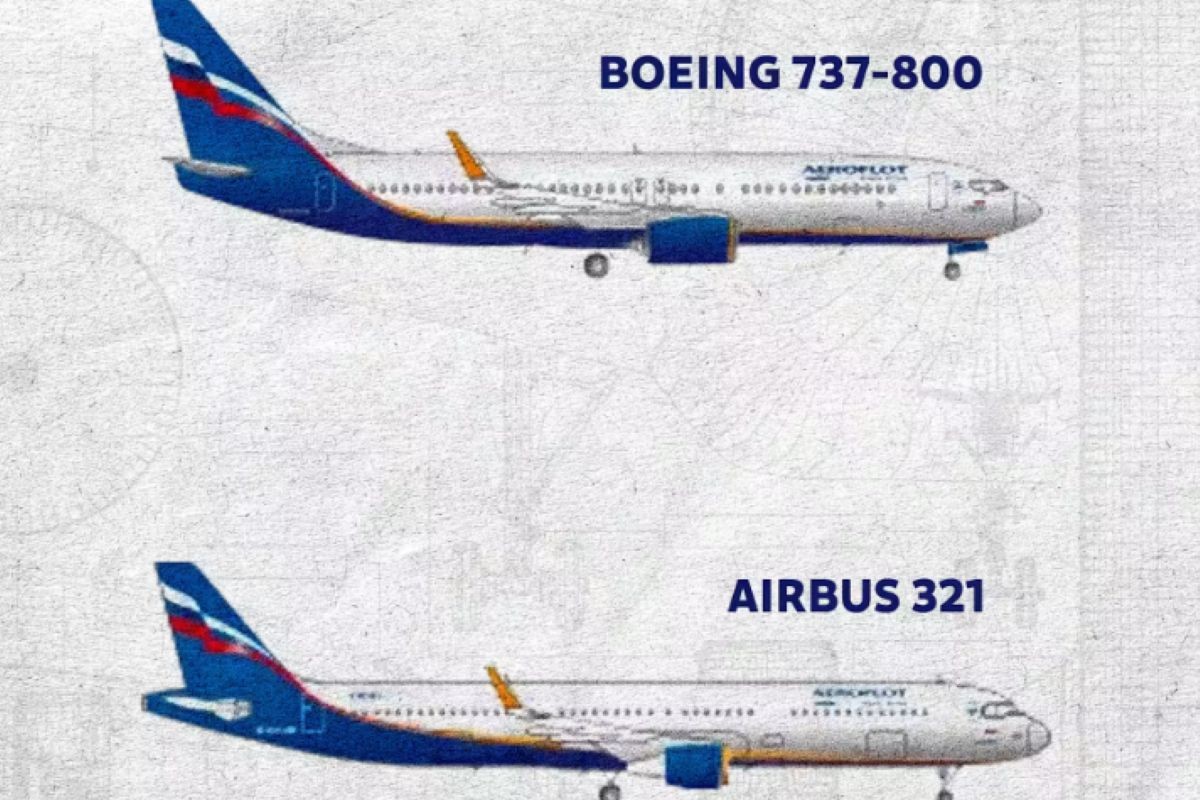
Customs-data-based research documented approximately €1 billion in Airbus and Boeing spare parts imported to Russia from February 2022 through September 2024—approximately 4,000 shipments from over 360 companies worldwide. Priority items included:
- Complete aircraft engines (CFM56, LEAP, Rolls-Royce, Pratt & Whitney turbofan engines)
- Carbon brake pads and landing gear assemblies
- Avionics modules (flight management computers, cockpit displays, navigation systems)
- Hydraulic components and fuel system parts
- Engine components and auxiliary power units
Primary Russian recipients were state carriers (Aeroflot Group, Utair, Ural Airlines) and maintenance firms (Aeroflot Technics, Utair Engineering). Approximately two-thirds of parts were new and obtained directly from original equipment manufacturers (OEMs); the remainder consisted of used or aftermarket components.
An analytical report covering January 2023–January 2025 documented 1,920 engine transactions totaling $353 million, with CFM International products accounting for 76% ($270 million). Critically, 94% of aircraft engines and 73% of engine components were classified as explicitly prohibited under EU and U.S. sanctions, demonstrating intentional evasion rather than exploitation of legal "gray zones."
2025 Trends: Network Adaptation and Evolution of Evasion Routes
India as Primary Transit Hub
The most significant achievement of Russian sanctions-evasion tactics in 2025 was India's transformation from a secondary participant to the principal channel.
Whereas the UAE and Turkey dominated the "gray export" supply network for civil aviation in 2022–2023, India's role surged sharply in 2024–2025 following heightened U.S. and EU scrutiny of Persian Gulf and Turkey routes.
An Investigate Europe investigation documented over 700 individual shipments worth more than $50 million from Western company facilities to India and subsequently to Russia between January 2023 and September 2024, with the majority occurring in 2024–early 2025. Over 40% of these shipments originated from the United States, and one-third departed from European airports.
Key Indian intermediaries identified in 2024–2025:
- Ascend Aviation India – Received at least 80 shipments from Boeing since 2023, most subsequently re-exported to Russian buyers including Aeroflot. Airbus subsidiary Satair dispatched 12 shipments between September 2023 and May 2024, all subsequently forwarded to Aeroflot and Ural Airlines. U.S. sanctions imposed in October 2024 cited exports of hundreds of shipments to Russia, including over $200,000 in sensitive U.S.-origin components. Corporate filings record revenue growth from 72 million rupees ($860,000) in 2021 to 985 million rupees (€10.8 million) in 2023.
- Aerotrust Aviation – Established in late 2021, shipped approximately $7 million in parts to Russia from January 2023, with 80% traceable to Western companies. Primary client: state-owned Aeroflot Group.
- Agrim Aviation – Sanctioned by the United States in October 2024 for "diverting or attempting to divert" aircraft parts to Russia. Supplied over 160 shipments from Western companies to Russia between January 2023 and September 2024, nearly all to Utair (sanctioned by the EU in December 2024 for providing "logistical support to the Russian Armed Forces").
- Allestro Aero Solutions – Initially registered as a retail clothing vendor (Allestro E-Service) in 2015, pivoted to aircraft parts trading in 2023. Revenue surged from nearly zero in 2022 to €2.8 million in 2023. Purchased over $3 million in parts from Italian firm Superjet International, subsequently re-exported to sanctioned Russian company Rapart Services.
- Arezo Aviation Services – Owner Sanjay Kaushik arrested in Miami in October 2024, facing up to 60 years' imprisonment for allegedly importing critical aircraft parts worth millions of dollars from the United States to India prior to re-export to Russia. One transaction involved a $500,000 adaptive flight display shipped from the United States to India in August 2023, then re-exported to Russian buyer PDS Avia, with intermediaries receiving $60,000 in commissions (a 12% markup).
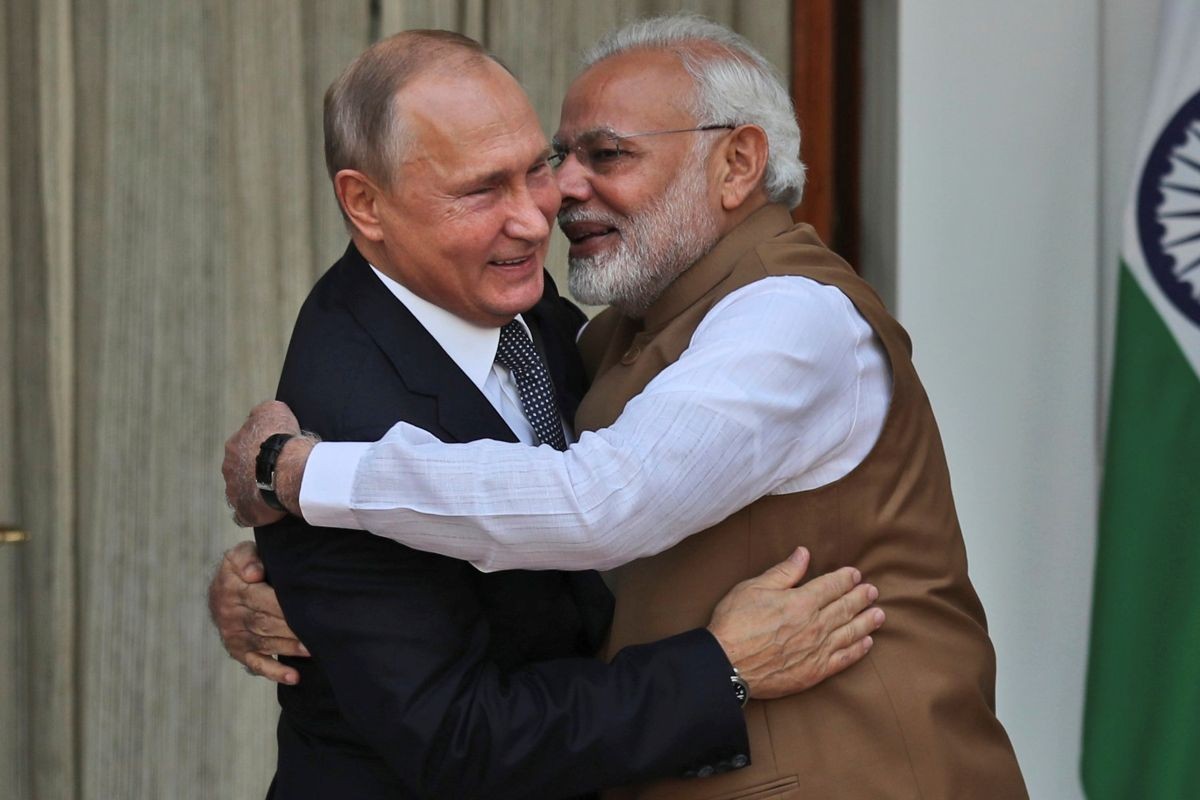
The attractiveness of the Indian route stems from three factors: (1) India has not imposed sanctions on Russia; (2) robust bilateral trade relations provide cover for dual-use transactions; (3) India's large legitimate aviation market complicates scrutiny of individual transactions more than in smaller Gulf states.
Proliferation of Multi-Jurisdictional Corporate Chains
By 2025, enforcement actions against direct UAE-Russia and Turkey-Russia routes prompted intermediaries to structure transactions across multiple jurisdictions, adding layers to obscure ultimate beneficial owners.
Criminal cases in 2025 documented new schemes:
An April 2025 case involved a Russian national who utilized Turkish bank accounts and shell companies to procure aircraft parts for Russian airlines. This reflected a shift from 2022–2023 schemes where Turkish companies themselves acted as direct intermediaries; by 2025, Turkish infrastructure was being used for transactions nominally between third parties.
A November 2025 case involved the prosecution of a Belarusian national who employed companies in Armenia, the Maldives, and other jurisdictions to transit U.S.-origin aviation components to Russia.
The scheme included:
- Initial purchase by an Armenia-registered entity.
- Transfer of ownership to a Maldives-registered shell company.
- Final shipment to end-user in Russia.
- Payment routed through multiple correspondent banks in non-sanctioning jurisdictions.
This multi-stage approach contrasts with 2022–2023 schemes, when parts typically moved through a single intermediary state (directly from UAE to Russia or Turkey to Russia).
Intensification of Central Asian routes
The incident involving Kyrgyz company Kargoline, which received spare parts from Lithuanian firm Right Direction Aero ostensibly for Kyrgyzstan but re-exported them to Russia after forging end-user certificates, represents just one documented case involving Central Asian companies in 2025, the geography of which indicates the region's expanding involvement in Russian schemes.
Corporate Adaptation and Business Model Shifts
2025 data evidenced rapid adaptation of business models by intermediaries to evade detection, including:
- Sector shifts – Several Indian companies previously operating in unrelated sectors (apparel, general machinery) suddenly entered the aircraft parts market in 2023–2024 and reported massive revenue increases in 2024–2025, indicating repurposing of existing corporate shells for sanctions evasion.
- Name changes and re-registrations – Following U.S. sanctions in October 2024 against Indian entities, investigative journalism in early 2025 documented several sanctioned firms continuing operations under slightly altered names or through corporate structures linked to the same beneficial owners.
- HS code manipulation – 2025 compliance analysis documented increased use of generic customs codes ("machinery parts," "industrial equipment") for aviation components to avoid automated alerts in export control systems. One case involved sensitive avionics systems declared as "electronic test equipment" to conceal aviation end-use.
UAE and Turkey: From Direct Hubs to Systemic Platforms
While the UAE and Turkey remained critical nodes in 2025, their role evolved from direct transit to providing financial, logistical, and legal infrastructure for multi-jurisdictional chains.
UAE:
- Dubai free trade zones continued to facilitate registration of shell companies with opaque beneficial ownership structures
- UAE logistics firms increasingly served as consolidation points for shipments originating from multiple countries prior to forwarding to Russia or other intermediaries
- UAE banking infrastructure processed payments for transactions nominally between third parties (e.g., India–Kazakhstan) where Russia was the ultimate destination
Turkey:
- Turkish intermediaries transitioned from direct suppliers to service providers offering warehousing, repackaging, and documentation services for other intermediaries
- Turkish bank accounts were utilized by Russian and Belarusian nationals to structure purchases through proxies, as documented in the April 2025 criminal case
- November 2025 analytical reporting characterized Turkey as having "become the main pillar" of Russia's aircraft parts smuggling operations, emphasizing infrastructural rather than merely trade-flow roles
Enforcement Actions and Resilience of the Russian Evasion Network
U.S. enforcement intensified in late 2024–2025 with mixed results.
In October 2024, the United States sanctioned nearly 400 entities and individuals for facilitating Russia's military-industrial base, including 12 Indian firms implicated in aircraft parts diversion.
In April and November 2025, criminal prosecutions began against individual facilitators of sanctions-evasion schemes utilizing Turkish, Armenian, and Maldives structures.
Impact on flows
Early 2026 analysis of data demonstrates that while specific intermediaries were disrupted, the network demonstrated resilience, rapidly transitioning to alternative jurisdictions and corporate structures. Overall import volumes in 2025 remained substantial, though precise full-year figures are not yet available.
Meanwhile, the European Commission stated it is "closely monitoring attempts to circumvent sanctions" but acknowledged that "so far no concrete evidence of such circumvention involving Indian intermediaries has been found." This sharply contrasts with detailed customs data documented by investigative journalists in February 2025, indicating significant gaps between investigative findings and the EU's official enforcement posture.
Operational Impacts of Sanctions on Russian Civil Aviation
Nevertheless, the cumulative effect of three years of sanctions—even with functioning parallel import networks—manifested in 2025 as substantial operational stress, specifically:
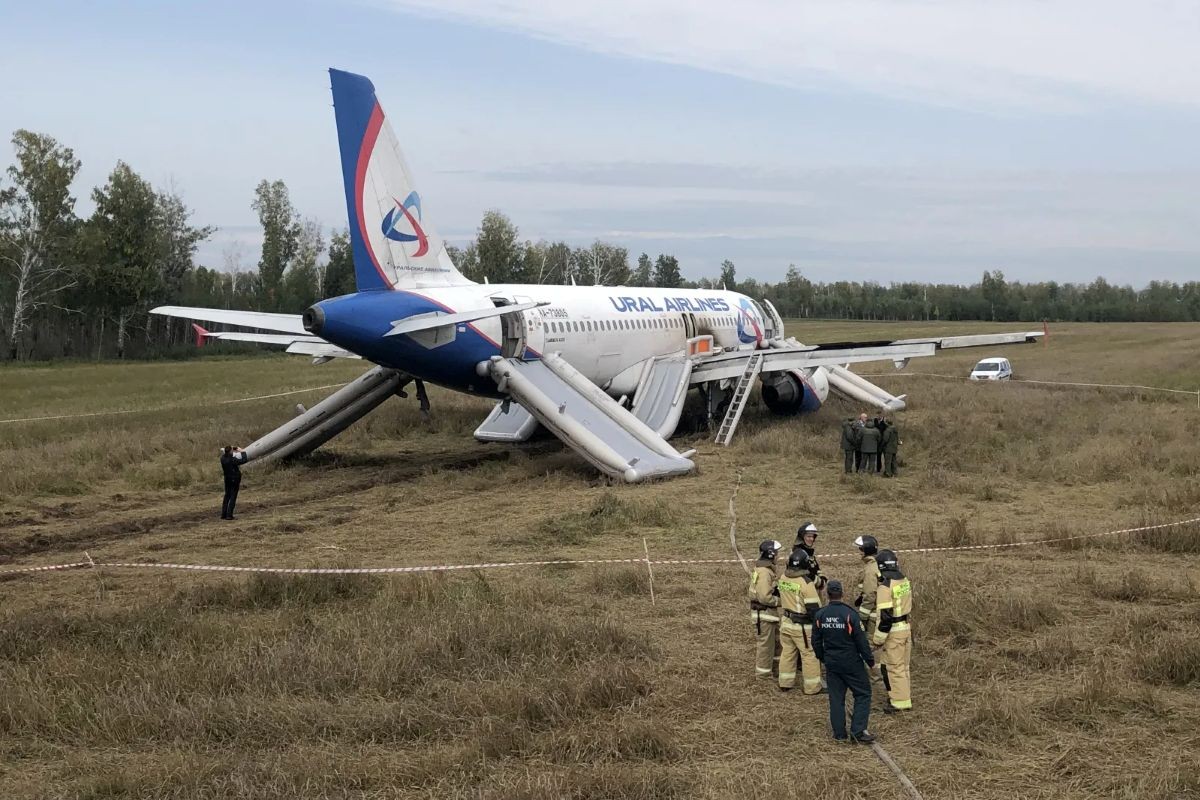
Safety incidents escalated. BlackSeaNews monitoring documented dozens of serious powerplant failures and over 100 unscheduled landings in just the first seven months of 2025, as well as dozens of engine-related incidents throughout the year. Daily occurrences also included wing mechanism malfunctions, air conditioning failures, brake and landing gear problems, and fuel leaks.
Fatal crashes. In July 2025, an An-24 aircraft operated by Angara Airlines crashed, killing all 48 persons aboard. Post-crash inspections revealed that the airline systematically falsified maintenance logs, ignored mandatory airworthiness directives, and employed unqualified technicians—practices that have become the absolute norm in Russia not only in commercial aviation but even in specialized training institutions preparing professional pilots. Compelling evidence of the objective difficulties facing Russian civil aviation is that instead of regulatory bodies strengthening safety oversight, they are instead being forced to continuously lower the standards themselves.
Fleet reduction forecasts. Russian aviation officials openly acknowledged that over five years, approximately 30% of Western aircraft (roughly 200 aircraft) will be fully retired from service.
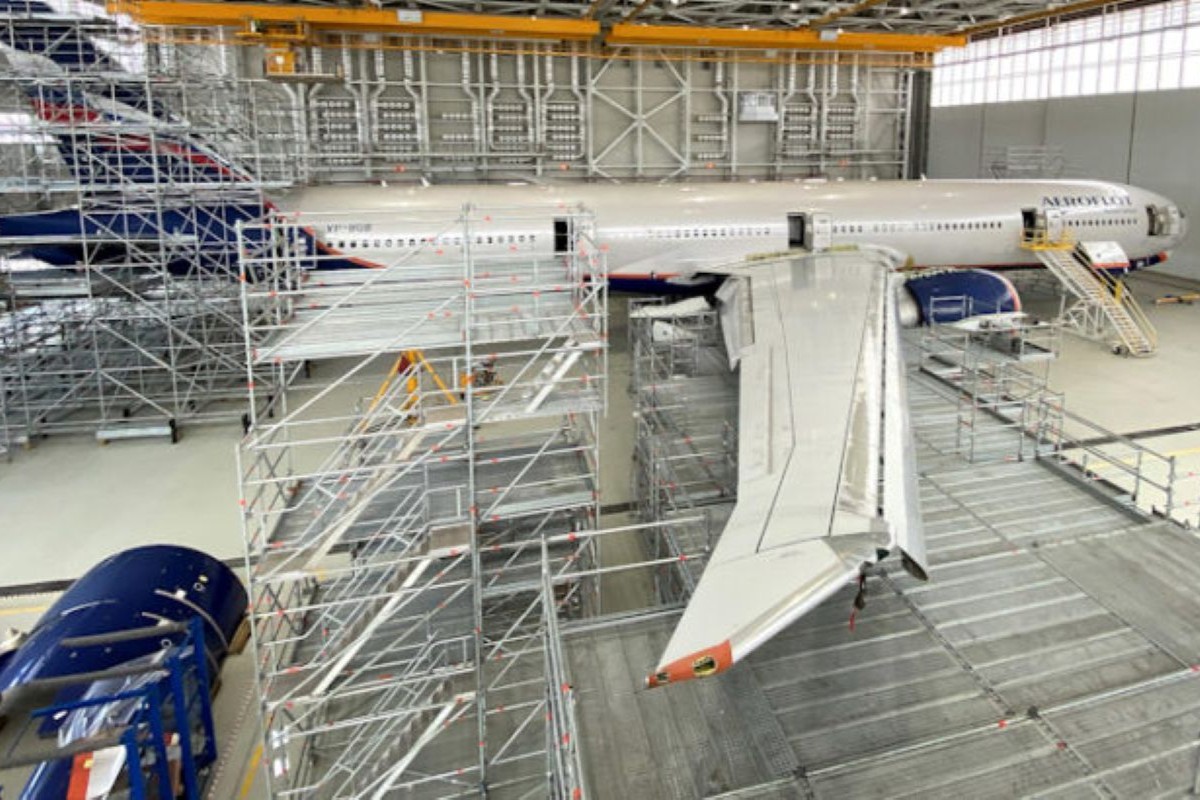
Cannibalization intensified. With insufficient certified spare parts despite parallel imports, Russian airlines increasingly dismantled parked aircraft to maintain operational aircraft in flight, accelerating long-term fleet degradation.
Regulatory collapse. Following June 2025 UK High Court rulings in favor of Western lessors in multi-billion-dollar insurance claims regarding aircraft seized after 2022, domestic Russian insurers faced unprecedented exposure threatening to overwhelm reinsurance capacities.
The EU's February 2025 ban on flights to Europe by airlines leasing aircraft, crew, or personnel from Russia successfully deterred third countries from wet-lease arrangements, closing one potential evasion pathway.
Conclusions and Prospects
In 2025, Russia's parallel import architecture proved adaptive. As soon as Western enforcement targeted UAE and Turkey routes in 2024, Russian parallel import networks rapidly pivoted to India. When direct bilateral flows attracted U.S. and EU attention, Russia promptly expanded its network of multi-jurisdictional chains. And after individual scheme intermediaries came under sanctions, other involved corporate structures rapidly repurposed or re-registered.
Currently, this resilience is sustained by at least three factors:
-
Financial incentives for scheme participants remain substantial. Commission margins of 10–15% on high-value components (up to $60,000 on a $500,000 part) incentivize stable participation by intermediary firms despite legal risks.
-
Primary transit hubs still do not face substantial enforcement pressure regarding sanctions. India, the UAE, Turkey, and Central Asian states have not imposed sanctions and maintain robust economic ties with Russia, mitigating pressure to enforce Western restrictions.
-
Multi-jurisdiction corporate structures continue to effectively obscure beneficial ownership. By 2025, typical chains involved 3–4 corporate entities across different legal systems, each with limited transparency requirements, complicating end-to-end tracing even with customs data.
However, the trajectory is unsustainable. Russian aviation officials' acknowledgment that 30% of the civil fleet will be forcibly parked over five years, combined with the acceleration of safety incidents in 2025, suggests the system is approaching critical limits. Whether collapse occurs through parts exhaustion, catastrophic safety failures prompting mass groundings, or effective sanctions enforcement closing residual loopholes remains the central question for 2026–2027.
As BlackSeaNews already noted in our December 2024 analysis of 2025 trends, the ongoing support of China, India, Central Asian states, and especially Turkey and the UAE—which have become strongholds and main hubs for Russia's aircraft parts smuggling operations and their concealment—still allows its civil aviation to stay afloat. To counteract this requires both substantial strengthening of sanctions against all links in smuggling schemes benefiting Russia and unification of the sanctions approach across the various jurisdictions in which they operate.
References:
BlackSeaNews and Black Sea Institute of Strategic Studies.
(2024, December 14). Russia's Civil Aviation in 2025: Flying Close to the Edge. BlackSeaNews.
BlackSeaNews/Black Sea Institute of Strategic Studies proprietary continuous monitoring of Russian civil aviation safety
Yle. (2025, June 25). Russia still getting spare parts for Airbus, Boeing aircraft despite sanctions. Yle Investigative Unit.
Varon, C., Matthews, C., Joyner, E., Miñano, L., Buzzoni, L., Cieśla, W., & Hansens, P. (2025, February 19). Boeing and Airbus shipments passed on to Russia via India, despite sanctions. Investigate Europe.
Important Stories (IStories). (2023, September 12). Russia procures $180 million worth of authentic Boeing and Airbus aircraft spare parts in a year despite sanctions. The Insider.
Aviation Turkey. (2025, November 19). Turkey & Russia Close Cooperation Indicates Big Opportunities for All Parties in Aviation Industry. Aviation Turkey.
Kharon. (2026, February 26). Russian Sanctions Compliance in 2025: Detecting Evasion Networks. Kharon Brief.
Evidecity. (2025, August 18). How Russian companies circumvent sanctions through Turkey and the UAE. Evidecity.
* * *
 This publication has been produced with the support of the European Endowment for Democracy (EED). Its contents do not necessarily reflect the official opinion of EED. Responsibility for the information and views expressed in this publication lies entirely with the authors.
More on the topic
- 06.01.2020 Databаse of airplanes that flew to the occupied Crimea and EU member-states, USA and other destinations in 2019
- 14.12.2019 24 aircrafts operated by 9 Russian airlines flew to the occupied Crimea on December 13
- 13.12.2019 20 aircrafts operated by 8 Russian airlines flew to the occupied Crimea on December 12
- 11.12.2019 22 aircrafts operated by 9 Russian airlines flew to the occupied Crimea on December 10
- 03.12.2019 20 aircrafts operated by 8 Russian airlines flew to the occupied Crimea on December 2
- 01.12.2019 23 aircrafts operated by 8 Russian airlines flew to the occupied Crimea on November 30
- 26.11.2019 20 aircrafts operated by 8 Russian airlines flew to the occupied Crimea on November 25
- 24.11.2019 23 aircrafts operated by 9 Russian airlines flew to the occupied Crimea on November 23
- 21.11.2019 23 aircrafts operated by 9 Russian airlines flew to the occupied Crimea on November 20
- 20.11.2019 23 aircrafts operated by 9 Russian airlines flew to the occupied Crimea on November 19
- 19.11.2019 21 aircrafts operated by 8 Russian airlines flew to the occupied Crimea on November 18
- 18.11.2019 27 aircrafts operated by 9 Russian airlines flew to the occupied Crimea on November 17